
Team Camino x Spartathlon 2026

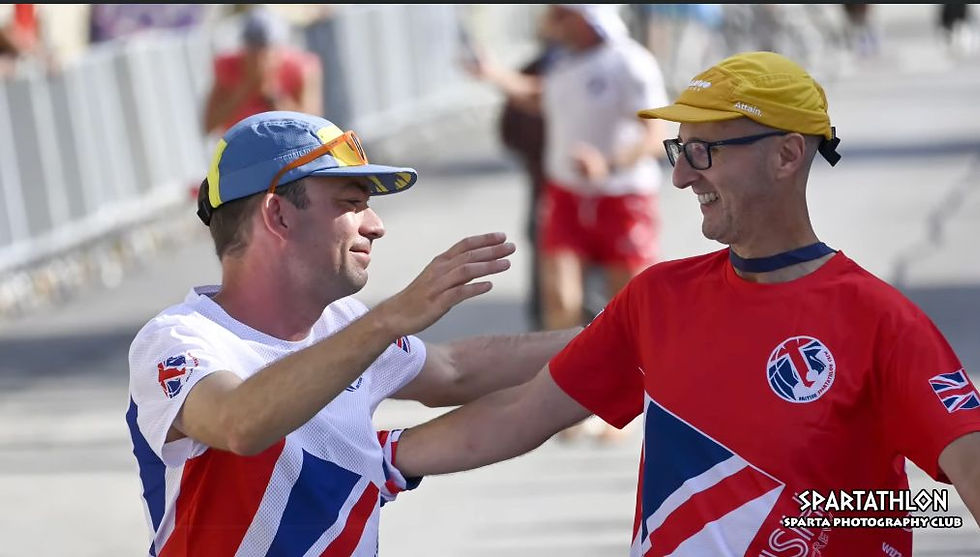
Even with over ten years of Camino coaching history with our beloved Spartathlon race this year we had five incredible Camino athletes as part of the 385 starters from around the globe.
As well as the amazing Anna Brown (returning for her third straight version) we had our own Co Founder Paula and three more Spartathlon newbies - Gordon Mead, Luke Carroll and Richard Phillips.
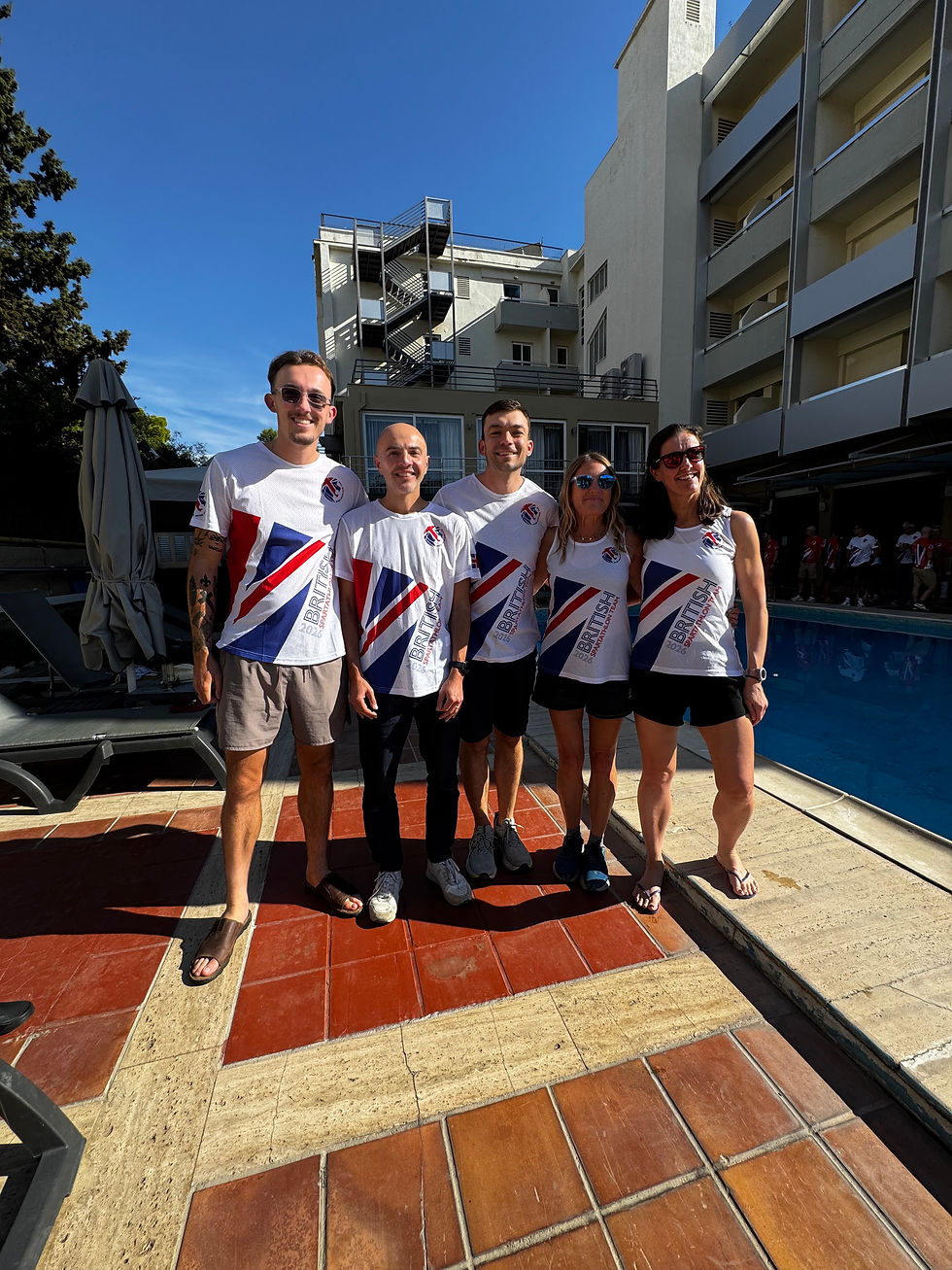
The few days we spent in Athens together were there to lure us in - gorgeous days spent relaxing by the pool and swimming in the sea (after the many weeks of hardcore sauna training) were about to be replaced by a cold wet start at the Acropolis and then one of the coldest editions of Spartathlon since storm Zorba in 2018.
So how did our five Caminos get on this year?
Well we are grateful for their blog contributions - full of great insight into this years version and hopefully a great Why? for you to consider signing up in future years.
If you have any questions at all and/or are Sparta curious then contact the coach team on info@caminoultra.com
Now over to the Camino Squad x
RICHARD PHILLIPS:
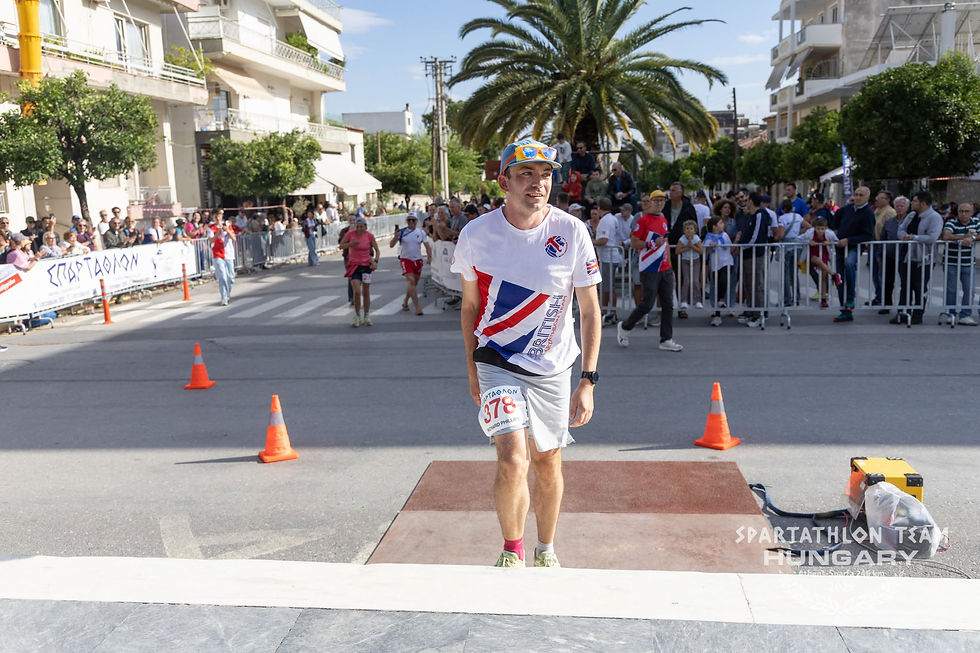
I got my first experience of Spartathlon and the British Spartathlon Team last year when I joined Anna Brown as crew for her second attempt at the race. I’d wanted to go to understand more about the race and see if it was for me (spoiler alert, I thought it was). The original plan was for me to crew solo, but another runner’s sister wanted to join a crew to get to Sparta and so ended up joining me in the car. Whilst the crewing itself wasn’t plain sailing, the company certainly helped both pass the time, and also provide a second brain for trying to problem solve the issues as they arose.
I got a place in this year’s race relatively late, being drawn from the wait list after the entry deadline in June. Whilst I had sufficient time to adapt my training, it was rather more difficult to organise anyone to crew me. Step forward Simon Maughan from the Camino community. Similar to myself 12 months prior, he was looking to see what the race was about, and prepare better for possibly doing it in 2027.
Following the usual whirlwind of preparation and registration in Athens, I had been driven to the foot of the Acropolis before I knew it. Immediately on stepping out of the car we felt the first raindrop. The signal that this was going to be an unusual race weather-wise. This also demanded the first race decision - to wear a raincoat or not. Knowing doing so was committing to carrying it for 4 hours. I reasoned this out with Simon, and agreed I’d be travelling fast enough to be fine without.
I got through the first two crew points (42km; 80km) without really having much to remark about - bar getting soaked through (correctly without a coat) and having to run through torrents of water at the side of the road. To be fair, having no complaints was probably the plan.
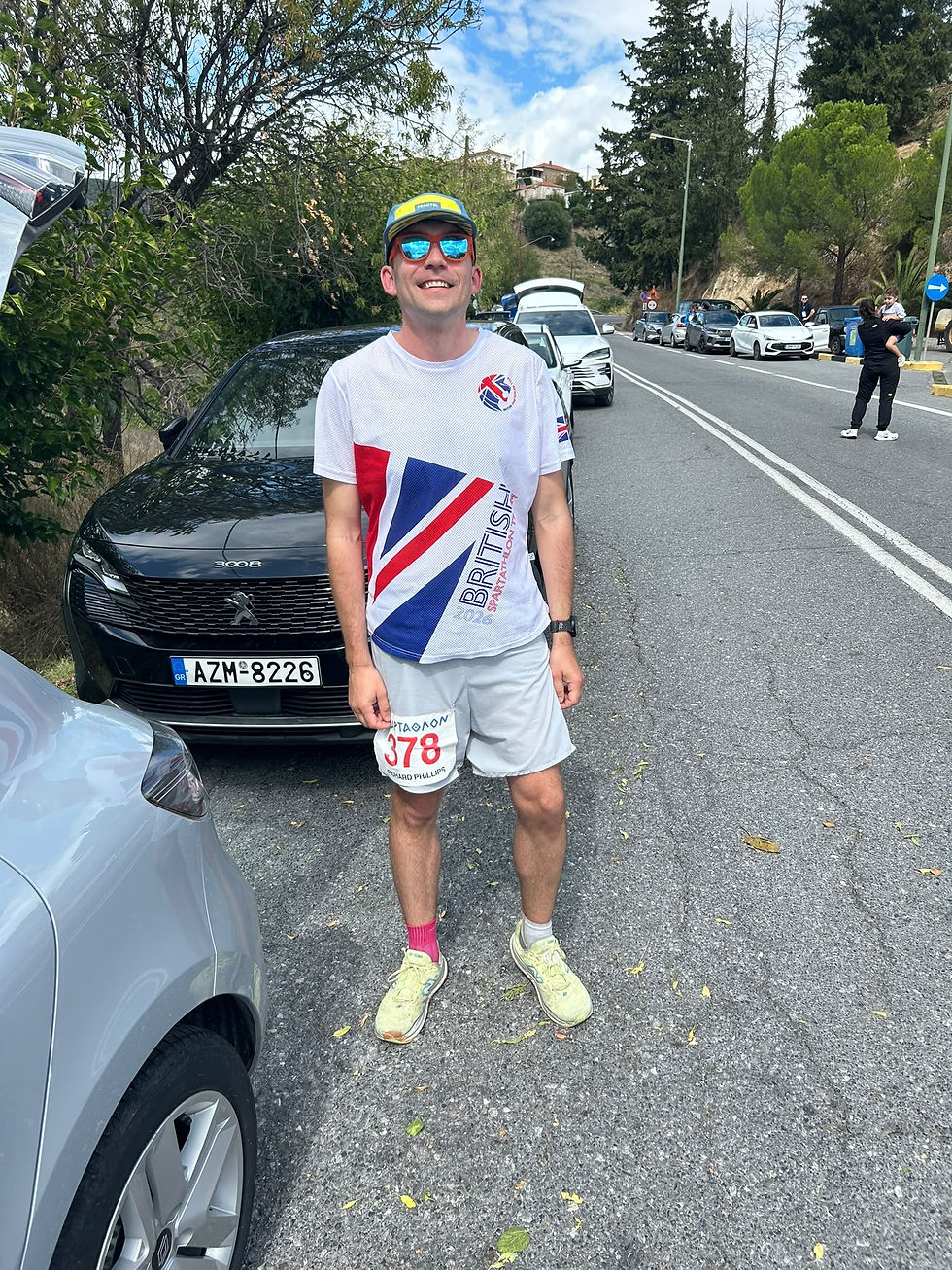
In truth, my race as a whole was unremarkable. Sure, there were the highs and lows that come with running for just over 33 hours. But I was able to split it into manageable bitesize chunks, thanks to the frequent crew points that varied between 9 and 17km apart.
Just keep knocking them off. And at one point, I had managed to switch my brain to thinking - this is just what we’re doing now, keeping moving forward.
It’s not lost on me that without this ability to segment the race into something mentally digestible it could have been a very different story. Pair that with having the emotional comfort of seeing a face who was there just for you. Who also happens to have all your stuff so you don’t need to guess where to leave it in drop bags.
The high of the race for me was topping out ‘the mountain’ at 100 miles. I enjoyed the different terrain on the way up as well as the distance milestone - but it was also this mysterious thing that people have stories of. Last year it was the one bit of the course that I couldn’t experience. Going into the race, I had run the distance once before. So for me, this was the last unknown, and in some ways from here I knew I could finish.
The lows I won’t dwell on - let’s just say hallucinations of imaginary BST runners running alongside me; a car reversing straight at me & Simon at a crew point; and a couple of bouts of vomiting.
I gradually slowed through the second day. Grinding out the kms and putting up with being in the hard should of a decently fast road. By this point, i’d also stopped seeing other British runner’s crews. This is another thing I was hoping wouldn’t happen - as it meant I knew that Simon was operating totally solo. To some it might feel stupid to suggest that crewing is more difficult than running the race. However, to do this solo is demanding on the body and mind. Last year I could only describe the time as the most anxious 24 hours of my life. Hopefully I wasn’t too difficult as the runner - but i still know this was one hell of a task.
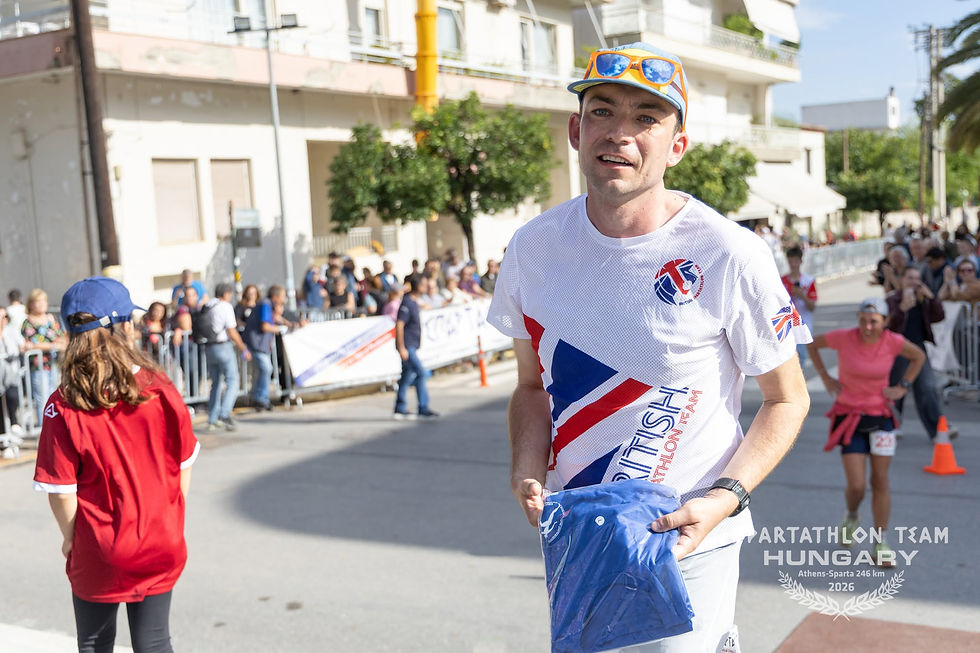
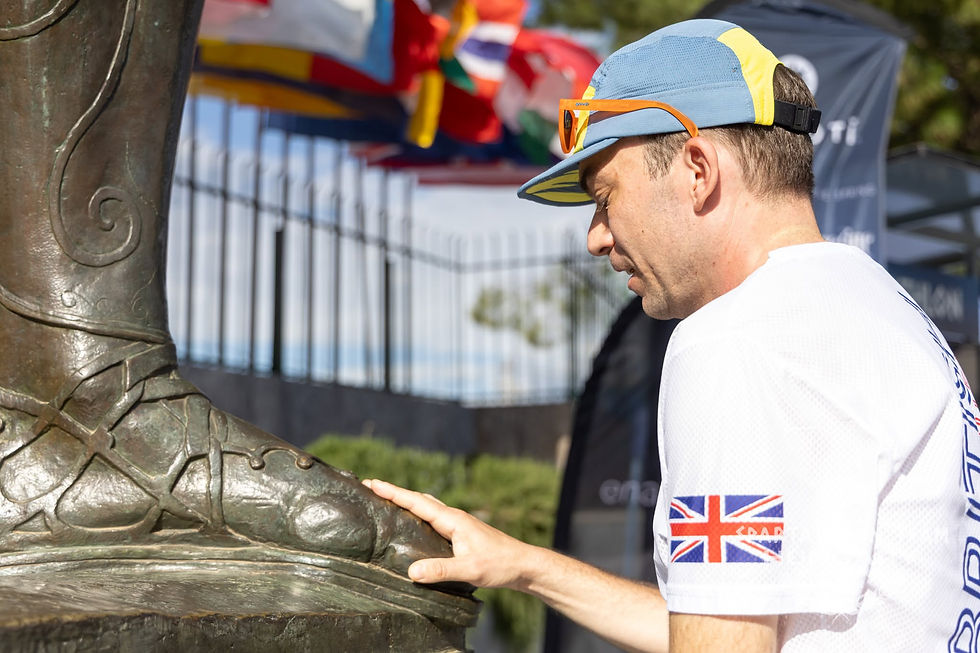
The forward progress eventually brought me to Sparta. I did the magical right turn onto the road that leads to the statue. Somehow, I thought I was able to run again and trotted up to Simon for us to take the last couple of hundred of metres together. It’s incredibly fitting that the race allows the crew to join their runners on the final stretch.
We did it.
LUKE CARROLL:
An incredible experience I will never forget. It was a privilege to step onto the start line of this historic race which I’ve had my eyes on for a few years now. By far my biggest challenge to date.
What made even more special was the British Spartathlon team, having the support of everyone in the group, past and current runners, made the journey way less stressful and more enjoyable.
The race was immense, rain from the start, mild conditions, everything I didn’t prep for!! But sometimes you just have to play the hand you’ve been dealt.
I stuck to the same strategy, keep things nice and easy from the start and just try and be consistent. This worked to an extent. Then everything sort of didn’t.
Rain really messed my feet up, huge blisters as big as my pinky toe were just popping up. I did everything I could to manage this but I left it too late. Blisters you can run through but it’s not that pleasesnt.
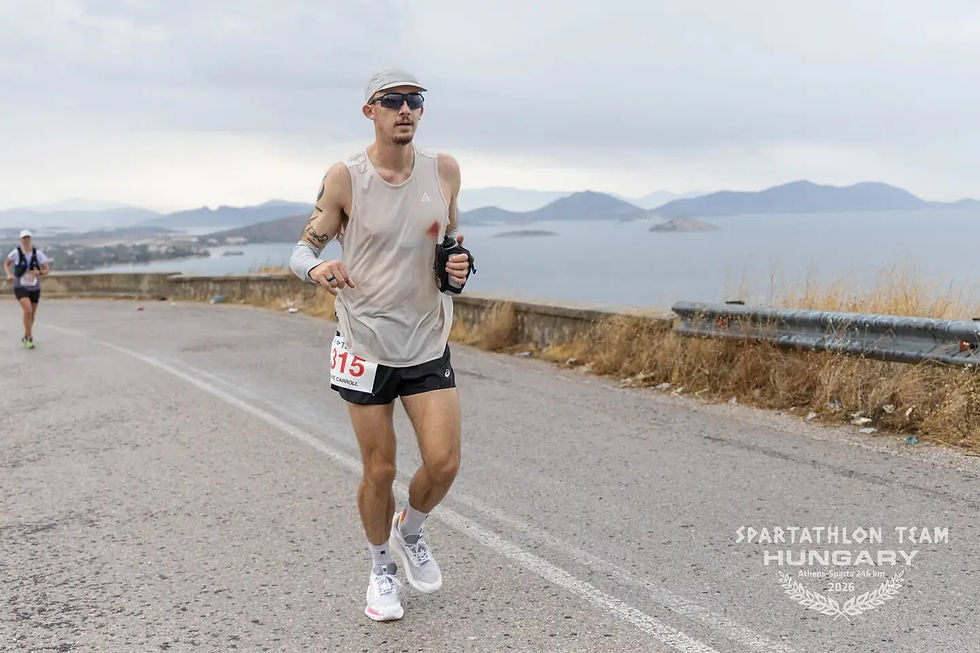
Legs then started fatiguing because of the shear amount of tarmac I was running on. And then to top it off, Nausea settled in, which is something I’m still trying to work on in terms of preventing and elevating during.
In the end, I got timed out at CP45 around the 100 mile mark, all the above slowed me right down to a walk/shuffle and in the end the cut offs caught up.
It was gutting in the moment, but I find you learn so much more through adversity and failure and that’s where we can change, adapt and overcome for future races.
I look forward to returning to Spartathlon in the future and giving it another shot.
ANNA BROWN:
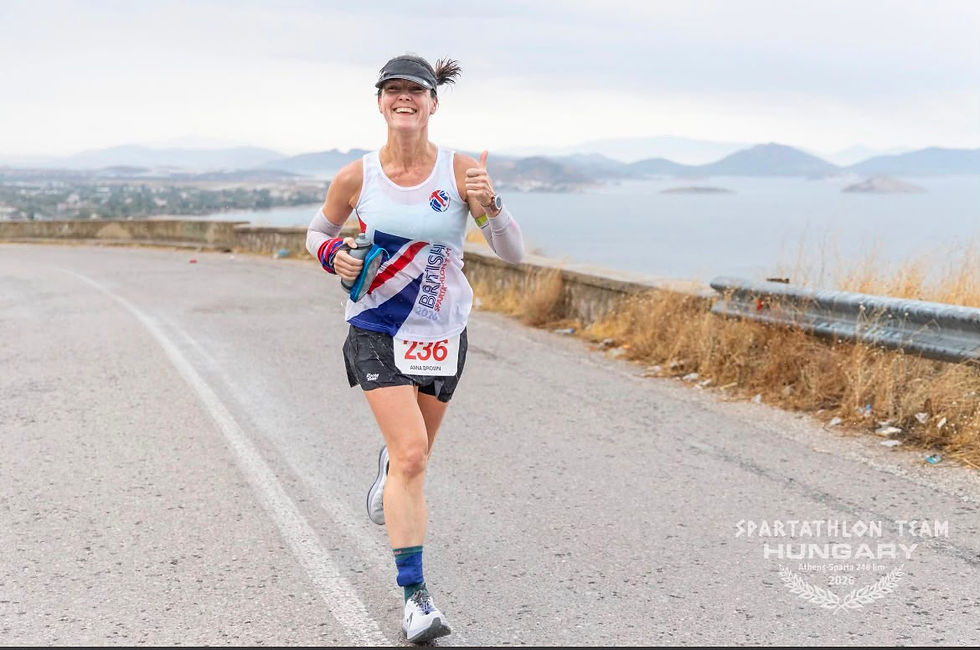
My Spartathlon story goes back to 2024 when I first got in on the ballot. That year, with a lot of help from my super-crew David and Daz, I managed to battle through extreme heat and an immense amount of pain to stagger into the finish in 34:49.
I’d had to walk most of the last 50k and had borderline heat stroke. The immediate response that kind of physical onslaught was ‘never again’ but it only took a couple of days for me to realise I wanted to do better… I had to come back. 2025 was that year after managing to be successful again in the ballot. I had a pretty successful year in the lead up, with a victory at London 100, a course PB at SDW 100 and an overall win and female course record at KACR. Things were looking good for a better Spartathlon, but the physical and motivational recovery from the canal took longer than anticipated and I ended up probably spending too much of the Summer in recovery and not enough on hard training.
Despite that, the 2025 race was going well for the first half and I ended up an hour up on my previous time by Ancient Nemea (122km). It was at this point my knee started to hurt with a stabbing pain on impact and within 20k I was walking all the descents. When it then started to rain on the climb to Mountain Base I started to get really cold. Despite full waterproofs and extra layers, the climb over and down the mountain was too much and I was in agony as I slipped and jarred my knee down the wet shingle track. I was borderline hypothermic (ironically) as I came off the trail at Sagkas and my race was over - I was gutted.
Coming back after last year’s DNF was a big decision and it took a long time for me to commit to actually going for it. As soon as I did I knew I wanted to approach it differently which was a massive gamble. I declared it the year of the ‘short’ race in order to keep more consistency in training and avoid the peaks and troughs that go with tapering and recovery from long races. I also wanted to work on my speed and fitness to make my ‘plodding’ ultra pace feel easier so I hadn’t run anything longer than 125km since last Spartathlon coming into this year’s race. This seems to have had the desired effect and I came to Greece having run a 10k, marathon and 50k PB this year and with a solid block of 100k+ weeks through July/August. My only real fear was an annoyingly achy knee which had been giving me grief for the last month or so - it had the potential to derail the race before it started and I was terrified that would be the case.
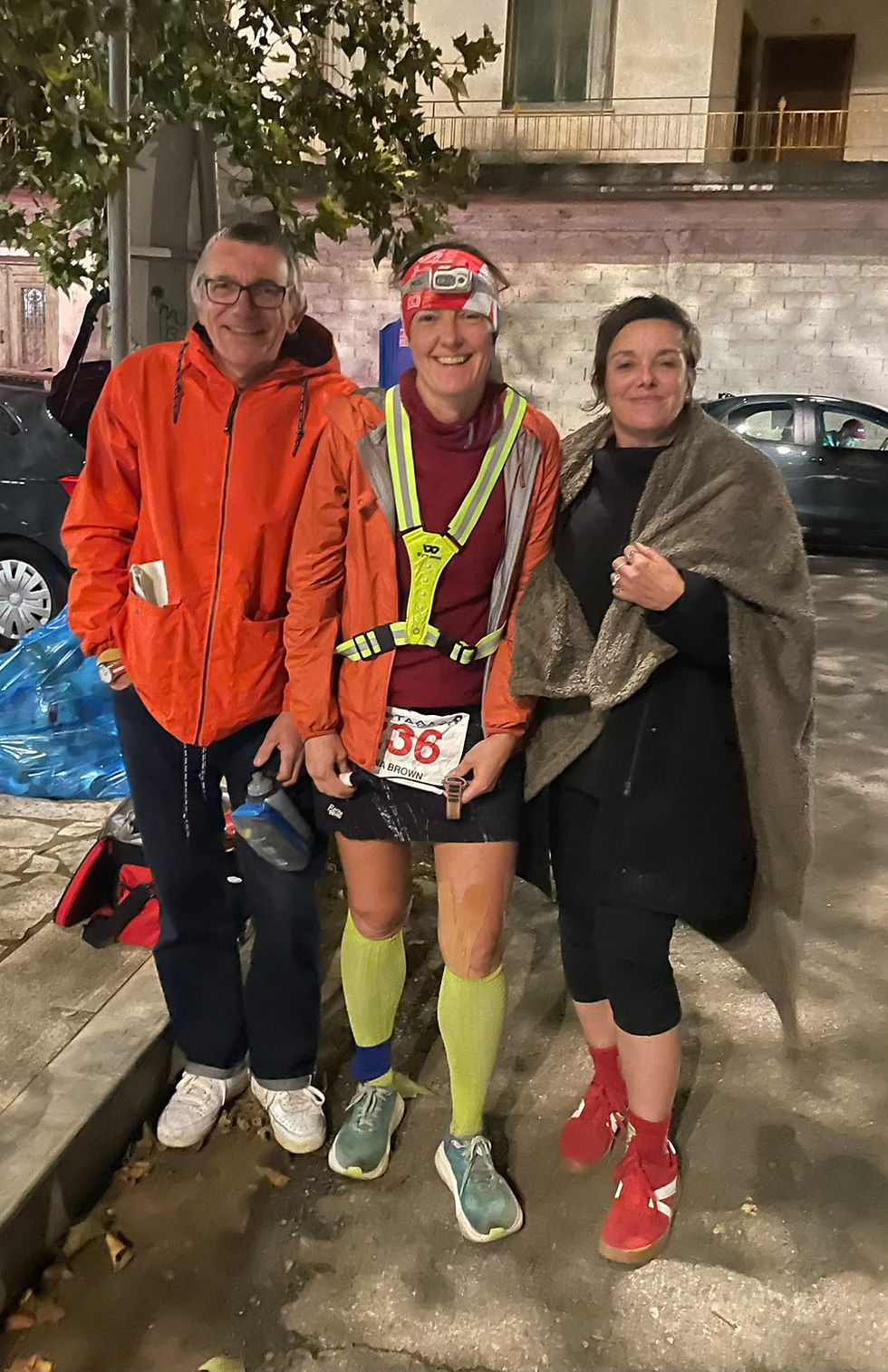
For 2026 I had my sister Kath and brother-in-law Lee crewing me. They had been locked in ever since seeing how my DNF affected me last year which was one of the reasons I decided I had to go for it this year. They have great experience crewing me on all night races in the UK and I sold this to them on the basis that hanging out in Greek villages is more fun than standing alone on a dark canal at 3am..! On the morning of the race they drove me to the Acropolis and I was acutely aware of the light rain beating against the windscreen. Whilst grateful it didn’t look like it was going to be a crazy-hot year, I was worried about a repeat of last year’s demise in the cold and wet. We mustered nervously with other team members, all keeping waterproof coats on until the last minute and then shed them as the start became imminent.
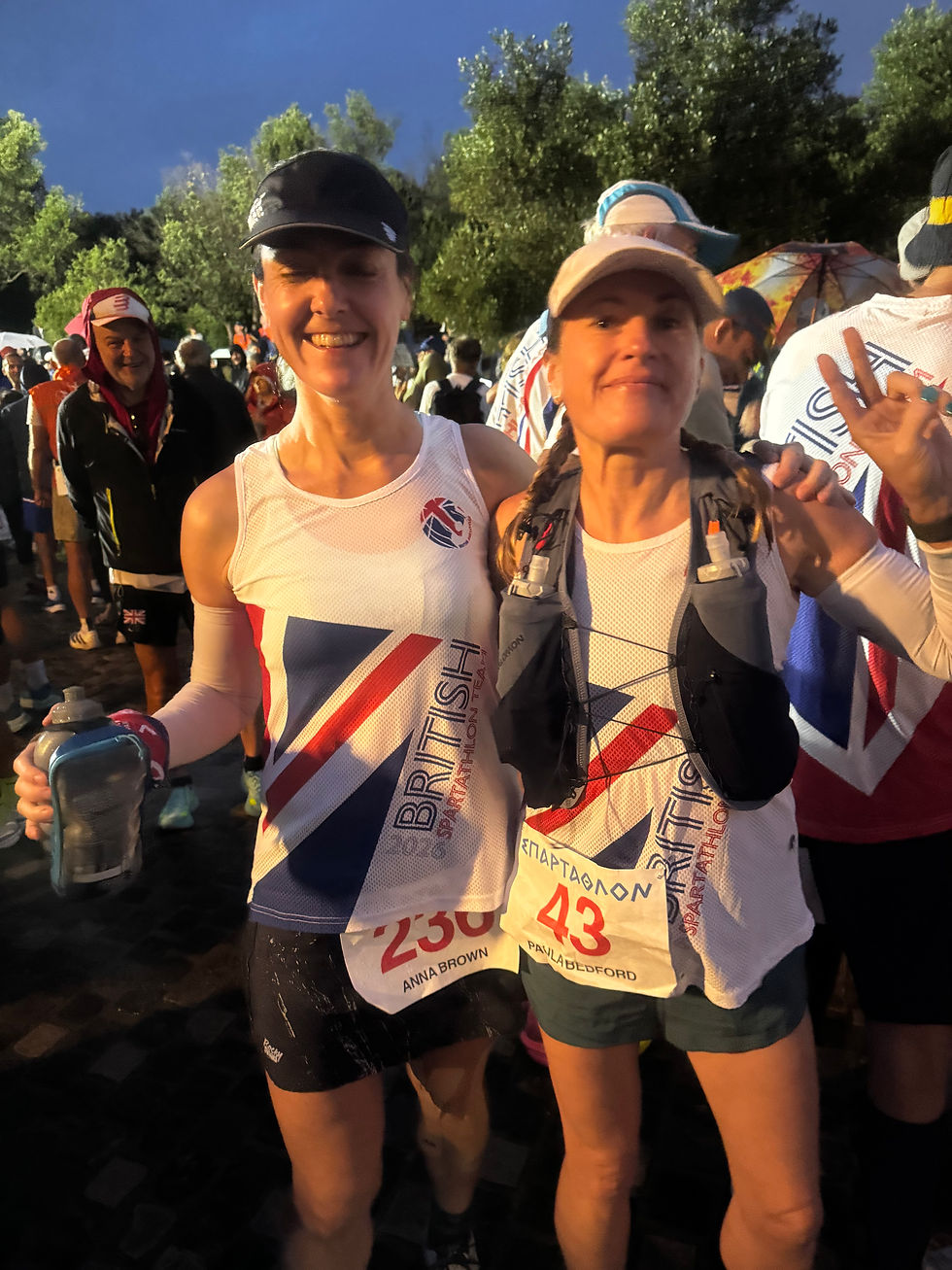
As the gun went I moved into the now almost formulaic routine of the first 50 miles of Spartathlon. The weather may have been a lot wetter, but everything else was exactly the same. Drop bags… pace strategy… crew points. I just had to grind it out to the Corinth Canal and then see where we were at. I felt pretty good for all of this phase and the cooler temperature meant I had to stop at fewer checkpoints to refill water, therefore losing less time which was a bonus. I kept a decent 60g/hr intake of carbs going and used each drop bag to top up on salts in my water. There was a lot of rain and an annoying amount of unavoidable surface water which had me worrying about feet and blisters early on, but I remained relatively comfortable other than a slight tightening in both Achilles. I approached the 80k checkpoint with a slightly punchy 50 mile PB - probably not the best strategy for a race 3 times as long, but all I could do was roll with it and hope it took a while for the wheels to fall off! It was great to see Kath and Lee at Hellas, just past the canal, as it was the beginning of the much more crewed phase of the race and it could now be broken down into manageable chunks. I was also excited for them to get into a more scenic part of the course so they could have a decent experience!
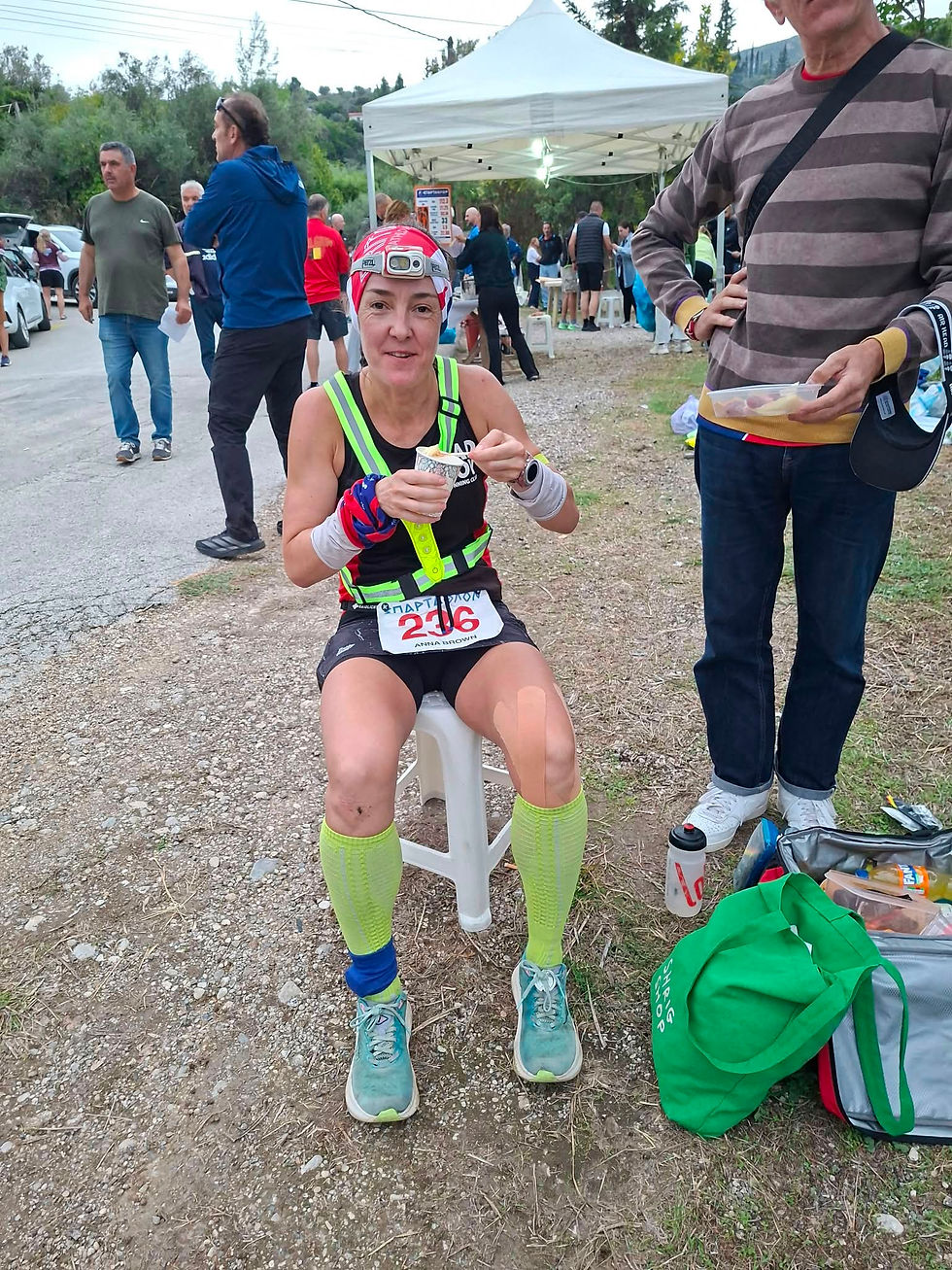
The middle third of the race was where it all went wrong last year. This time I’d been actively running softly on all the downhills since mile-1 in order to preserve my quads and knees and so far it had seemed to pay off. I managed to almost maintain my early pace through 100km and a couple more checkpoints and was pulling further and further ahead of cut off. In 2025 we’d discussed planning to pick up my head torch at Zeygolatio Corinthias (101km) or Halkeion (112km) so it was a massive confidence boost to get to Halkeion in broad daylight this time. I picked up the torch anyway but I also got to experience the long downhill that followed it with a beautiful valley of olive groves down to the right, which I’d never seen before due to darkness. I’d caught up with Liam at this point too and we passed several KM together chatting which really helped us both to keep moving. By the time I reached Nemea, it was dark and I was feeling really good to have got to this point without breaking - I’d managed not to even need to stop for a massage yet. I’d also stretched out my buffer to 3 hours on cut off which I had never achieved at any point in my previous two attempts - life was feeling pretty good!
The run out of Nemea was even better as last year I’d been pretty much crying in pain on every descent from this point, whereas this time I had a huge grin plastered all over my face as I jogged down the hills and I felt so grateful. Any time I felt like it was hard I just told myself ‘I get to do this’ or sang to myself (badly) a bit of Kelly Clarkson’s ‘Stronger’, hoping no one was within earshot! The next target was Malandreni (135km) which had traditionally become my chip stop and I was looking forward to it! The stretch here becomes very rural and is sometimes even on dirt roads and I must have been moving well as I counted 5 women I overtook in this section. Just as I descended the final very steep downhill into town I spotted a woman taking the wrong turn up a steep hill away from the square. I yelled (and yelled and yelled!) at her and nearly gave up when she eventually heard me and luckily turned round and came back down - I was SO grateful I recognised the turn and hadn’t followed her blindly!
After my chip re-fuel I was off into the night again heading for Lyrkeia, the final crew point before the mountain and the point at which last year I lost all of my buffer. It was just over 10k and I got there without too much drama, but was grateful to see the village approaching and not feeling like death. Last year I’d needed a massage and I had even attempted a sleep as I’d felt so rough while poor Rich crewing me had tried desperately to find a way to keep me moving. I’d also been begging the volunteers for some tape or strapping for my knee (they hadn’t had either) which is why this year I’d brought enough with me for the whole team! I was prepared to finish swaddled like Tutankhamun if that is what it took to get to the finish! I did agree to have a massage this time even though I wasn’t sure I needed it at this point as I was on target for a 100 mile PB which was quite frankly - ridiculous. I was also 4hrs 10 up on cut off.
When I finally set off on the road again I was quickly joined by a Spanish guy called Javier who seems to have noticed I’d been moving pretty well around his pace and decided to join me. I was very happy to have a running buddy for a while and although he was apologetic about his English it was infinitely better than my Spanish! He told me he had completed Spartathlon 4 times before and his time was normally around 32 hours but he felt like we were on pace for closer to 30 - this blew my mind. In my wildest dreams I thought I could aim for 32-33 hours at best with the unicorn target being sub-32 so I realised I needed to stick with Javier! We soon reached the climb to Mountain Base though and it became clear he was going to walk more of the ‘ups’ than I wanted to, so I sadly left him behind and jogged off ahead, Daz’s voice echoing in my head that ‘you can’t walk that whole section to Mountain Base!’. It was drizzling and bleak for the ascent but by the time I finally reached Kath and Lee over 5k later it had stopped and was looking good for a dry run over the mountain - relief! My nerves had been building as I closed in on my DNF point from last year but I sucked them up and set off on a hike, just determined to get past that point. It wasn’t particularly fast, but my focus now was to make it to Nestani (170k), even if I had to slow down to do so. I finally reached the top and was about to head straight off down the other side (which I’ve never done without a brief stop at the checkpoint) when I saw Javier! He had beaten me up there while I faffed at Mountain Base. This was amazing and we set off together again down the slippery scree and mud on the far side. We overtook a couple of people on the way down and then flew through Sagkas, with me barely suppressing a sob of relief remembering how terrible I’d felt here last year. I finally believed I might be able to keep this up - It was on. The descents were definitely starting to be felt in the quads but we managed to keep trotting all the way down to the flats and into Nestani where, despite apparently being quite grumbly, I was very happy to see Kath and Lee! My Achilles were both hurting quite a lot by now and the physio had a quick look at me, but was happy enough for me to head off. Now that I was running with Javier, who was uncrewed, I was more aware of faffing, so I picked myself up to get going more quickly.
The final third of Spartathlon is a war of attrition and a massive mind game. I’d thought a lot about this 30k of flat before the ‘second mountain’ and knew it played to my strengths as long as I could make myself push - so we did. The aim was to hit the climb at 200km as close to 24 hours as possible. We ran pretty consistently for the whole section, admittedly getting slower and with a few walk breaks, but mainly running. I was breaking down the distance and working towards milestones which I kept hitting - 24 hour PB, 200k PB - the whole thing was bizarre. I was starting to struggle a bit more with finding enthusiasm for food at the crew points and had been feeling a bit sick, but despite that had been managing to keep taking on gel pretty consistently which I think is the reason I was still standing. I was buoyed by managing to get through Zeygolatio and Tegea while it was still dark - this was huge for me. Javier and I hiked up the second mountain together, with me no longer trying to run the hills as I knew what was coming - in my memory the last 50k was the most hideous 50k of my life. It was also quite a long break between crew points here and mentally it was hard to keep motivated for so long so making it to checkpoint 65 at 210km was a big boost. Although I was in a lot of pain from my tight Achilles and sore quads, nothing about this final section was as bad as two years ago, when I’d been battered by extreme heat bouncing off the rocks and asphalt making me feel weak, whilst also being in too much pain to run. I just about managed to keep up with Javier until after we’d started the final 21k descent but I was definitely needing more walk breaks than him due to pain and when I finally needed to stop for a toilet break I decided I needed to send him on ahead - he was on for a PB too and I really didn’t want to damage that. I was fairly confident I could still break 31 hours on my own. Back on the road I was able to relax a bit more with a few more walk breaks but I still made myself jog more than was comfortable and I finally traipsed into checkpoint 72 for my final crew stop.
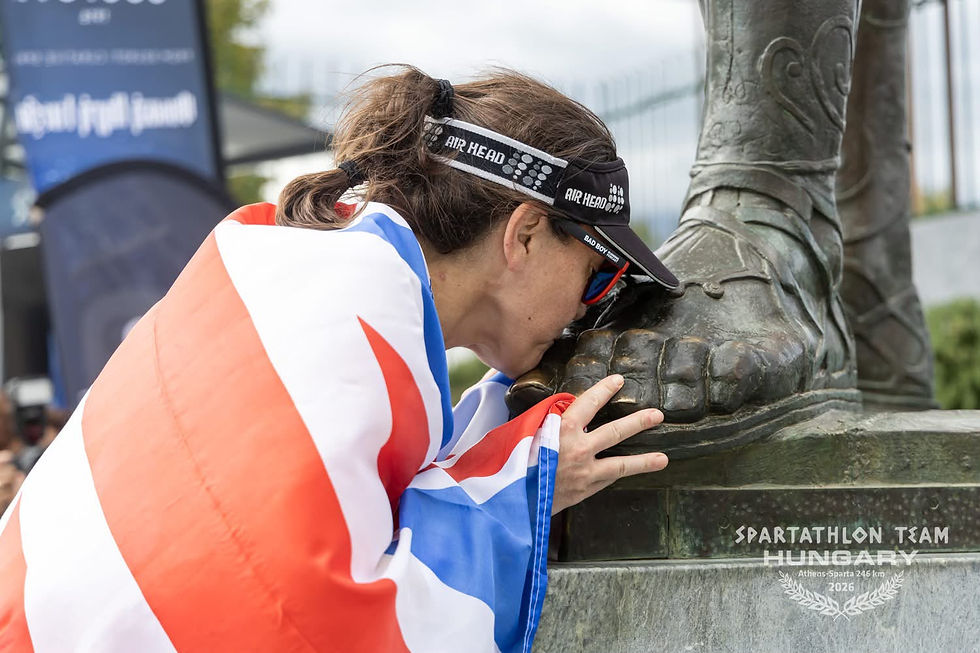
After a quick kit change back into GB kit, I set off on the depressingly long 10k final stint! The pain was immense by now and although I kept a jog on/off for the first 5k, when I got to 5k to go I was done - It was time for the death march. I knew I could make sub-31 and I was not going to make 30 - it really didn’t matter to me what time in between those two I got! The only bad part of this decision was when I was overtaken by Madeleine about 3k from the end. We’d leap frogged each other throughout the night, but when she came trotting by looking fresh, I had nothing left for the fight. This meant I ended up 11th rather than 10th but in the big scheme of things, I was ok with this! I was caught up by Adrian (Ireland), who I’d met at the start, shortly before the final corner, where he very kindly declared he wasn’t about to overtake me here! We then walked to the corner together, where I was overjoyed to see David waiting with my flag and a huge bunch of kids! We started the (much longer than I remember!) walk up the road towards the King. I probably over-enthusiastically started the final jog a bit soon and we had to go back to a walk, but the whole road to the end was just amazing - we were joined in our jog by Kath and Lee and so many kids running, on bikes, hi-fiving! It’s incredible how you can go from unbelievable amounts of pain to complete elation in the flick of a switch - there is no finish line like it! We crossed the mat and I walked up to King Leonidas to kiss his foot, instantly removing the year of gloom and doubt I’d been carrying. There was nothing in me that had anticipated a finish like this - just so happy!
I was quickly frog-marched to the medical tent where I was happy to see Javier who had finished about 20 minutes earlier. He was drinking a beer, so I then wanted a beer which the volunteers happily supplied - but 2 sips in and I started to feel a bit ill! The ‘medics’ (read - children) tried to massage my quads by pushing their fingers randomly into my thighs a bit while brutally handling my poor Achilles which were screaming at me which did very little to help - but bless their hearts, they tried! I then lay there while Kath and Lee got the car, and pretty much passed out with sleepiness, It was just bliss to lie down! I was then carted off to the house, via wheelchair transfer to the car (protocol!). It would have been nice to stay and see other team members finish, especially Rich after him so selflessly coming out to crew me last year but I was in no state - I had given it everything I had. We had to make do with watching on the livestream from the comfort of a sofa and it made me so happy to see him get his finish!
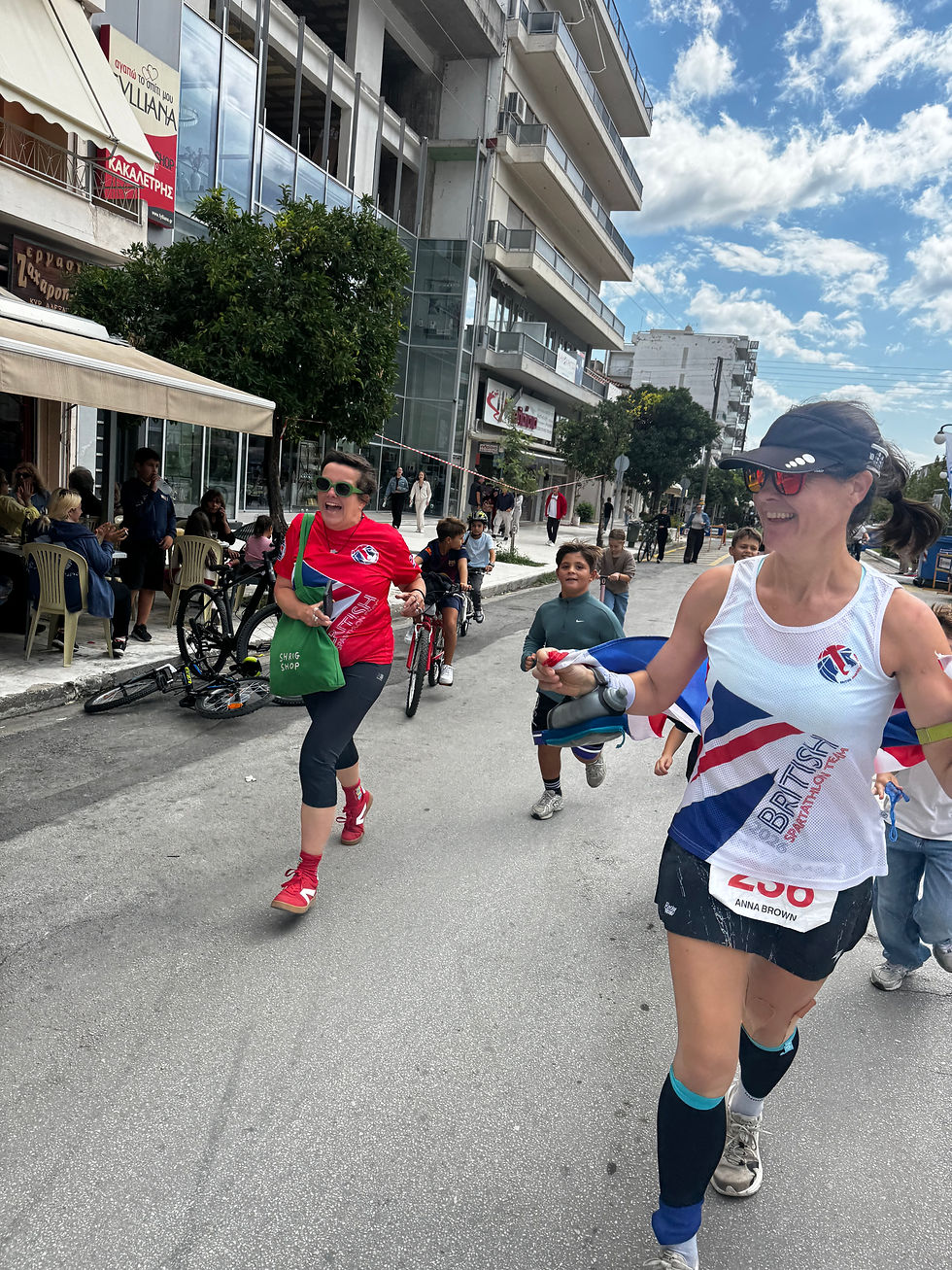
It is hard to describe what Spartathlon is like as a race. It’s the best combination of physical challenge, local pride, history, wonderful volunteers, incredible scenery (even from the road!) and team spirit. To have a gaggle of local children running you into the finish is just the best feeling in the world. After 3 years racing here though and now a finish time I could only dream about, it might be time for me to have a break from running it.
There is no doubt however that I’ll be back in Greece in some capacity in future years, so for anyone toeing the line in 2027, I guess I’ll ’see you in Sparta!’.
Massive thanks to Kath and Lee for coming with me and for helping me get redemption from last year’s race. It meant a lot for me to have them there and they did a fab job keeping me going and motivated. Thanks too to the rest of the British Sparathlon Team and crew – I just love being part of this team and it means so much more to race together with a shared goal. Final thanks to my Camino Ultra coaches for everything for all the support as ever! It was great having David, Paula and Frank out there this year as part of the British Spartathlon Team – it definitely felt like a Camino takeover!! So whose turn is it next year…..??
GORDON MEAD:
La mente y el corazon
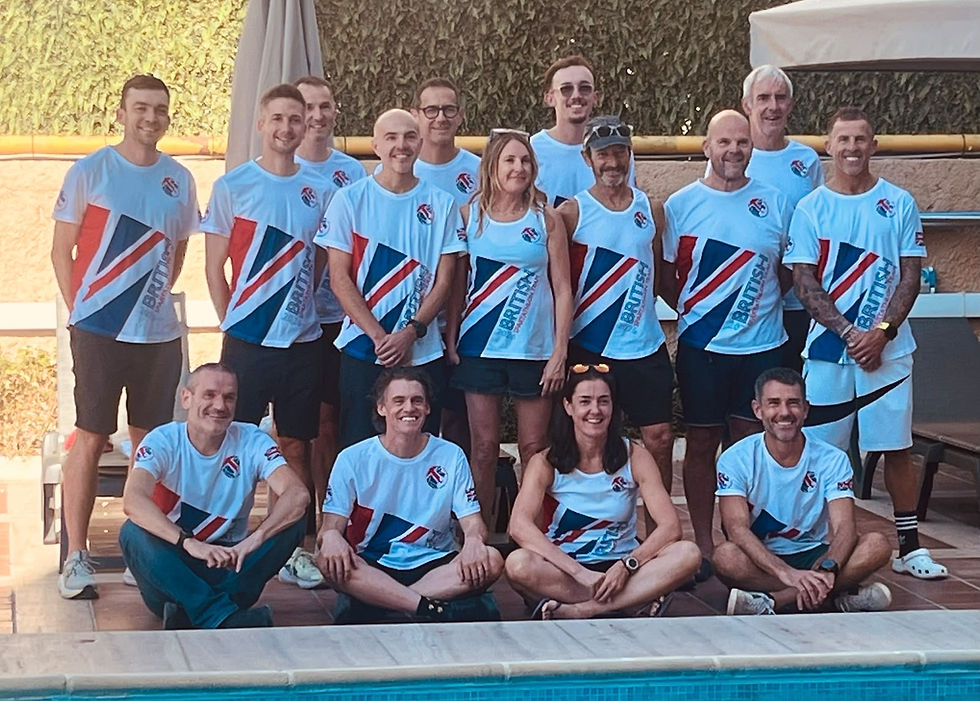
One thing I was not expecting on the start line of Spartathlon was rain. But about 30 minutes before the start Andy, my crew, said he felt some raindrops. We would feel many more during the race.
I was delighted with the drizzle. Although I’d taken every opportunity to run in this year’s heatwave and dutifully suffered in the sauna, I knew that every degree the temperature ticked down, the more my chances of completing my first Spartathlon went up.
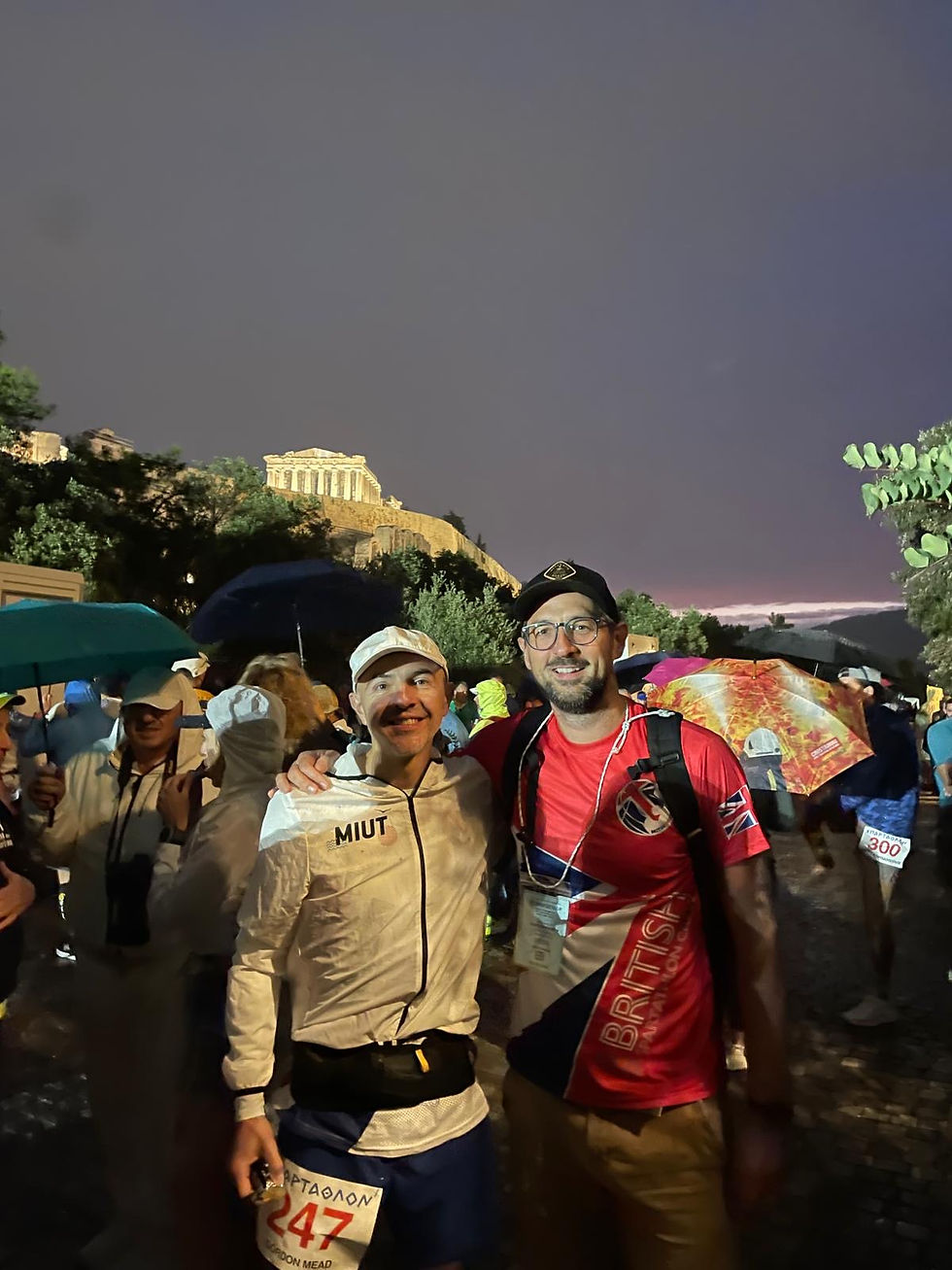
The British runners milled around and exchanged small talk. The Spartathlon start line is striking, with its amazing view of the Acropolis, but quite low key at the same time, almost like a flash mob of Lycra enthusiasts. The crowd started herding in one direction, I joined the back of the group and then we were off!
Before the race I had given my crew a pacing chart which showed ETAs for the crewed checkpoints for 36, 35, 34, 33 and 32 hours finish times. My base case was 33 hours (just an educated guess). The night before I pondered whether to stick to 33 hours or target 32 hours. Given that conditions were looking very favourable (clouds and temps in the low 20s) I opted for 32 hours. This meant that my target time for the first marathon had gone down a smidge from 4.12 to 4.04.
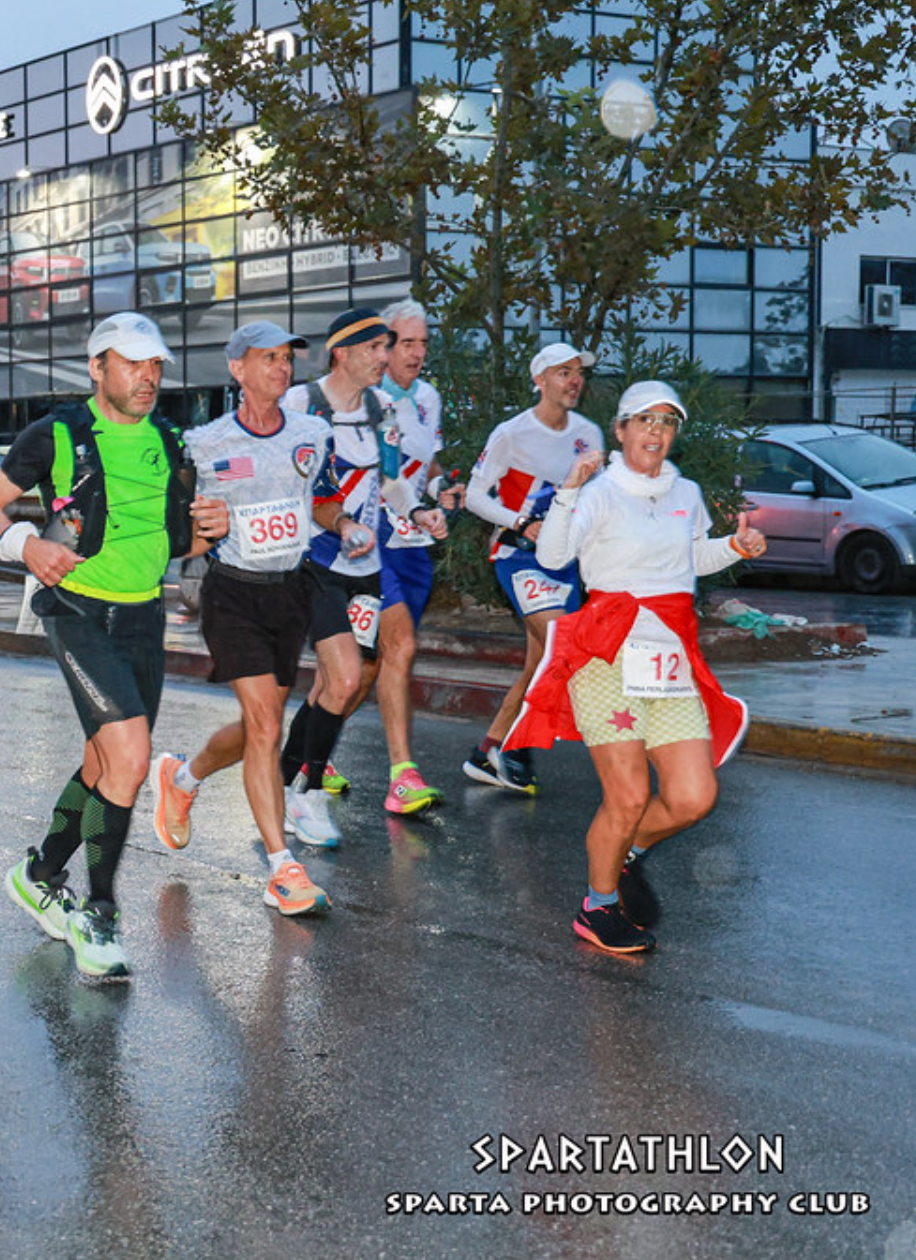
The first marathon was pleasant and I was excited to get going. I chatted to a few Brits on the way out of the city. Rich telling me that one issue he had not anticipated was puddles, and Dave S informing me at one point that we were a full checkpoint ahead of the cut offs.
We skimmed through Athens, then on to a motorway, then a road leading to the coast. We hit a highway by the sea. I’d read race reports by runners saying how they wished they could step into the cool azure sea. It was looking greyer today, but a great sight nonetheless.
This was when I had my first magic moment. I was running up a hill and an Argentine supporter (I’m guessing he was a runners’ dad) looks in my eyes and I look at him. He raises a finger to his temple: ‘la mente’. Then he places his hand on his heart: ‘y el corazon’. I nod my thanks and keep moving.
I felt humble and grateful. Grateful that this human being, in a simple act of generosity, connected with me when he could have just watched me run past. He could see I was British but could only use his Spanish. But I know Spanish so I knew perfectly well what he was saying. Without sounding schmaltzy, it was a beautiful moment.
It was also a special to me because I spend a LOT of time working on visualisation and positive mindset (mostly via Rocky training montages). When you are running Spartathlon and someone says ‘Your mind and your heart’, you know exactly what they mean.
Back to the race. There’s a refinery section which is ugly and has a sulphurous smell. I loved it. One of the things I love about ultras is that you spend time in places you would never normally visit. They’ve allowed me to spend time in mountains, meadows, forests, fields and bogs. Lots of bogs. One of my race aims was to find moments where I could feel grateful that I was actually running Spartathlon. For whatever reason, the refinery zone, like the ugly duckling it is, was one of them.
CP11 arrives and I’m through in 4.06, feeling good. Two minutes slower then my target time but whatevs. Then I see Andy at CP12. We had run through an elaborate CP protocol involving ice, cooling towels and sun cream, but it was a lot simpler in the cool. He had a tub of pasta and I tucked in. We did a quick gels in / rubbish out of my waistband change and a switch of hand held bottles. David Bone, my Camino coach, gave me a hug and I was off.
I found that pacing at Spartathlon has the ‘soft’ and the and the ‘hard’ sides. the hard side is the numbers: paces, ETAs, splits etc. The soft side is running by feel. My perhaps naive aim was to reach 50 miles feeling comfortable and, if at all possible, feel reasonable at mile 100. If I could do that then the numbers would take care of themselves.
After the first marathon the cut-offs ease up so according to my plan I only needed to run 10.5 minute per mile pace for the next marathon. So I eased to 10 minute miles or so.
I don’t remember much of this stage apart from chatting with Sir Ian Thomas of Spartathlon at an aid station with, to my mind, some excellent hip hop playing. The second marathon to Hellas Can has nicer surroundings like olive groves, vinyards and local villages. Again, under the cool cloud I felt relaxed and in the moment.
I reach the Corinth canal at mile 50 and there’s a sail boat going down the channel. It’s picture perfect and a lovely moment. Unfortunately, because I am looking left at the sail boat I didn’t see the camera and so I don’t have a cool photo of me running over the canal.
At the canal, and in a few other moments in the race, I had a strange sense of déjà vu. Over the years I have read so many race reports of Spartathlon, with their descriptions and pictures, that it was quite weird to be experiencing them myself in real time. At times it felt like running through the set of a favourite soap.
From Corinth the course gets hiller and I asked David B how to handle it. He said I’ve got a decent buffer so I don’t need to kill myself. But if something looks runnable then run it. I took that with me for the next 50 miles.
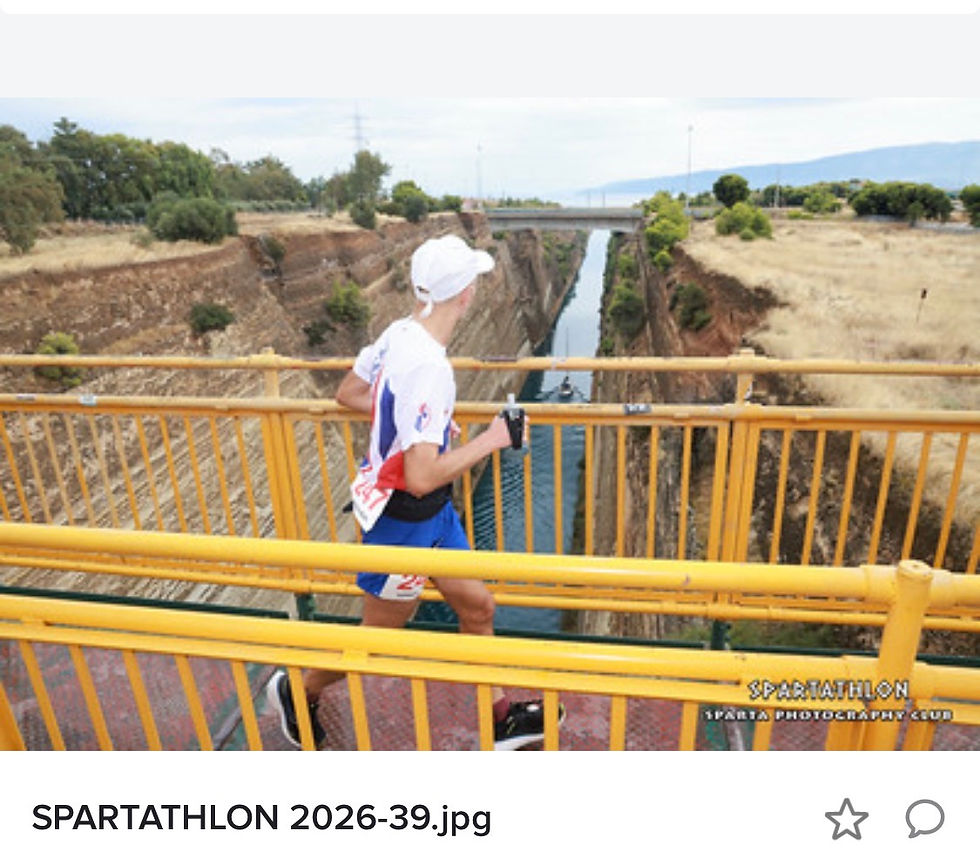
I’d arrived at Corinth at 8.30, ahead of my 32 hour goal pace of 8.42 and uttered the prophetic words ‘Andy, I’m going really well, do you think I should slow down?’ Hubris! It was as if the Gods were just waiting for an opportunity to put me in my place.
I don’t remember the exact miles but from miles 55 to, I think, 65 I really deteriorated. I went from ‘I feel so good I am struggling to run slower than 10 min miles’ to ‘come on Gord, you really need to get under 12 minutes miles’. I’m not sure you really need a reason to feel bad after running for 55 miles but this wave of fatigue was unexpected and sucked.
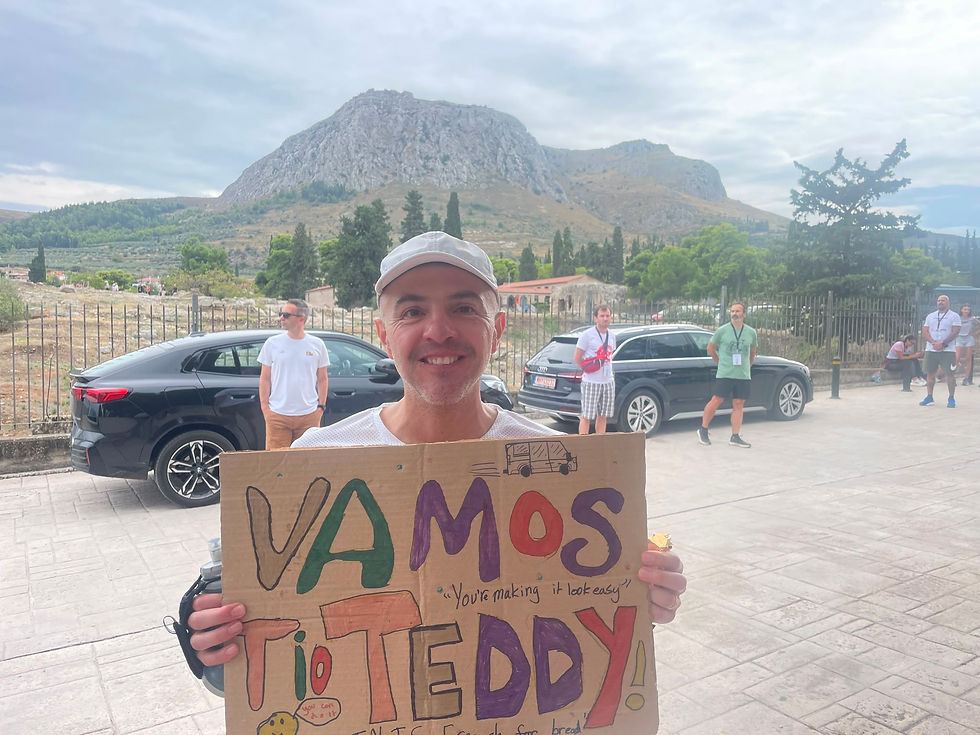
Mile 57 at Ancient Corinth and I meet with Andy for more gels and pasta. At this point Andy unveiled a motivational poster made by my niece and nephew. I asked Andy to use motivational posters made by my daughter and his two children at some ‘big moments’. He could see I was suffering and needed a boost.
I was feeling down and kept telling myself ‘remember: You are running the greatest race in the world.’ I also had the classic ‘it doesn’t always get worse’ and the new entry ‘el mente y el corazon’. Still, it was a grind.
And this is when the second magic moment happened. One minute I was running along, feeling achey and grumbly. The next minute, I realised that my back was straight, my legs and arms were flowing, and I had a more pep in my step. My pace went from 11.30 to 10.30. I told myself to make the most of this good spell; maybe it would last an hour. I didn’t know it, but it was to last 10 hours.
I don’t have much memory of the rest of the afternoon. It continued drizzling, Andy was doing great F1 pit stops, and the crewed CPs were friendly villages. I remember a girl in a village saying something to me in Greek and only caught the word ‘autograph’. I autographed her book ‘G Mead 247’.
Another memory: having to dart into the bushes to unburden myself and make good use of a ‘butt napkin’ that I had bought in a running shop a few weeks earlier. Some CPs had portaloos but in the stretch I needed one I couldn’t see one. Needless to say, I ran past a toilet three minutes later.
As it got chillier I put on a shell jacket and Andy suggested that I should put my head torch on at CP 32 rather than CP 29. This was a sign that I was well ahead of my 32 hour target. Somehow I had found a great balance of staying comfy but also running with a bit of intensity. I also put on a high vis waistcoat on. (Quite a few runners ignored the high vis rule which is frankly insane when running on the highways at night).
After CP 29 (Zevgoliation) There’s a lot of uphill, then some downhill, then you start climbing towards ‘mountain base’. The deal I made with myself was ‘try your best to run these inclines, and you can walk up the mountain’.
At some point in the night (mile 80 maybe?) I was chatting with Rich about ‘mountain strategy’. I’d read some race reports that said ‘everyone walks the approach to the mountain but a lot of it is actually runnable.’ I said to Rich that unless it was very obviously runnable then I was walking. And that’s what I did. Apart from a handful of stretches, I walked from CP 43 Lyrkia (92 miles) to CP 47 mountain base (99 miles)
Maybe around mile 85 I passed Bob Hearn. I had read his race reports very closely and took his comment ‘I like to bank energy, not time’ to heart. It’s my race philosophy too. Passing Bob gave me some doubt as I feel like the first rule of Spartathlon is ‘don’t overtake Bob Hearn’!
Around mile 90 (I think it was pre-mountain) I developed a pain in my right knee. It was a sharp pain that hit every now and then. I put some ibuprofen gel on the knee but it didn’t really help (it was probably an IT band issue or something). Because it was intermittent it didn’t slow me down but when it hit I gasped and had to pause for a moment.
As the race progresses the field stretches out and it helps the poor crew find parking spots in the crazy places they need to park. I met with Andy at mountain base and we had a powwow about the right jacket. I think at this point we switched from the shell to my proper OMM rain jacket. Better to be too warm than too cold up the mountain we reasoned.
Next up, magic mountain. It’s cool as it’s a chance to use different muscles, mountain base had a lively atmosphere and of course it’s a big milestone. However, it didn’t really live up to its hard man reputation IMHO. It’s no Tete au Vents. The thing is, you do a lot of climbing on the road before mountain base, so mountain ‘base’ is really mountain ‘halfway’.
Over the summer I’d spent three weeks in the French Alps on holiday with my family, running every day. I ran a small race in Manigod (maybe an hour from Chamonix) and although it was probably nothing special for the locals, it set quite a high bar in my mind for what a ‘mountain’ is. Going up with hands on legs, grabbing at trees and rocks to pull yourself up. Running down single track with exposed roots, loose stones and locals bombing it down past you. This experience was about to pay off.
I fast walked up the mountain in 26 minutes (perhaps arrogantly, I asked the CP volunteers ‘is this the top?’) and reached tarmac on the other side after 23 mins. Boom.
I’d reached 100 miles in 19 hours dead. After the mountain descent there’s a lovely downhill section into Nestani. David Bone says that there are three races: Athens to Corinth, from there to the mountain, and then to the end. So, I’d now entered round three.
At Nestani I changed shoes as I thought it would be a treat to have something fresh on my feet for the last 50 miles. Andy had used his McGuyver skills to prepare a little sellotape harness in the new shoes for the small white tracker you need for the timing mats. After a little while I realised that my feet had expanded and so the new shoes were a tight fit. Oh well, they’re on now.
At this point, my stretch of strong running petered away. I switched to a run-walk strategy of 25 mins running and 5 mins walking. But if there was an incline (or I thought it was an incline) I would walk that, so I was fast walking for maybe a quarter of the time.
One of the BST had warned me beforehand about cold temperatures on the plain of Tripolis, and I kept the jacket and high vis I had from the mountain. There’s a lot of straight road in this section and it was at night so not much to say about it. You just keep on keeping on.
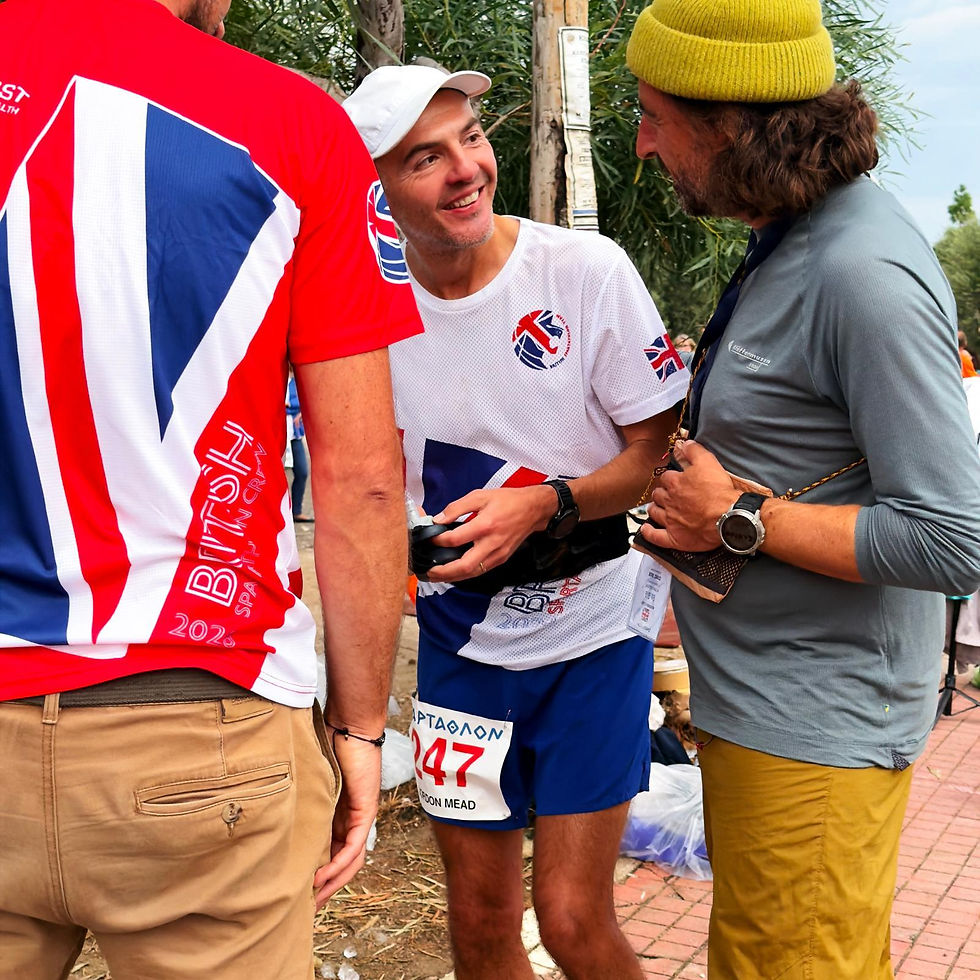
I followed David Bone’s advice and for the first time allowed myself to think about how I could complete this thing. Clearly, I was ahead of where I planned. I estimated that it was possible to go under 30 hours, and Andy had come to the same conclusion. I felt I needed to average 12 minute mile pace for the final 30 miles. I put it in the ‘nice to have’ bucket in that it would be awesome to finish in 30 or 31 hours, but I’m not going to put any pressure on myself for a specific time.
I had spent a bit of time on the Spartathlon website looking at the splits of runners who finished in the 32-34 hour window. The basic pattern was that runners lost about an hour of buffer from Nestani so I assumed that I would go from 30 hours to 31 hours, and that would be fine. One of the exceptions to the post-Nestani slowdown pattern was Sarah Sawyer’s terrific 2019 run.
But the bigger picture here was that I was just too tired to do mental calculations. Andy was telling me that he would next see me in 12k, 9k, 15k. I just didn’t know what those numbers meant anymore and boiled it down to ‘see you in two hours, give or take.’ I had a laminate of the course profile to see what was coming up, but I just couldn’t be bothered to get it out and review it.
The second mountain, starting at around 123 miles was the opposite of the first one. There isn’t much hype about it but it felt like a punch in the mouth. Just a relentless grinding climb up a highway. Maybe the grade was 3-5% but I couldn’t bring myself to jog up any of it.
It was daylight at this point, which was a boost. I found the next section, miles 125 to 139 (up until you reach CP 68 Monument) niggly and frustrating. I was just very tired after Alea-Tegea (CP60, 121 miles) and although I trotted where I could, this bit had a strong ‘death march’ vibe.
This is where I relied on ‘el corazon’; a base desire to keep moving and get this thing done. One bonus here was that there was a strong wind literally pushing us forward. The Gods had our backs!
At one point a volunteer says there’s one more incline, a big hill and then downhill. Whilst literally true I think it took an hour or two of walking and trotting.
So I finally arrive at Monument and Andy helped me recharge. Back on the road I realised that, somehow, I had been moving at 12 min mile pace since Alea-Tegea. This meant that finishing under 30 hours was very likely and if I kept moving I could hit 29.30. I’m not a competitive person but sometimes these these silly arbitrary targets help me keep pushing during the back end of a race.
There’s one last hill after Monument and then 10 miles or so into Sparta. I resolved to get this 29.30. In the last hill I got a tap on the shoulder from Toddy, still all smiles even at this late stage. We wished each other the best.
This was where ‘la mente’ switched back on. It was possible to get to 29.30 but it needed two hours of smart pacing which pushed my system without blowing it up. In F1 speak, it was ‘mode push’.
So, I start accelerating down this hill, overtaking people here and there. Before the race, my plan for CP72 was to switch back to my fab BST shirt, hug Andy, and enjoy a low pressure jog down hill. Instead, as I approach the CP, running hard, I take off the jacket I’ve been wearing since the mountain, hurl it in Andy’s direction and holler ‘I’m going for sub-30!’ In my mind it was quite Hollywood but to the other crew it probably just looked like I was flouncing off.
The downhill turned out really well. I was controlled, but my mile times were falling: 10 mins, 9 mins, even 8 mins. This is Sparta! I ended up running from CP 69 to the finish in 1:47. I credit this to the strength training over the last few months (for the first time ever!) which meant that my quads and hamstrings were still working at this late stage.
Arriving in Sparta at CP 73 a volunteer shouts ‘well done, you made it’! Err, not quite - still 15 mins of running. I stop at CP 74 to get my union flag, go over the river Eurotas, and then it’s the right turn into the town.
At this point I’m overtaken but I don’t mind. It means I have someone to show me the way home.
Hitting the final 200m was amazing. Andy was there and ran alongside me, as was David B. A gaggle of children swirled around me, like a disturbed shoal of fish.
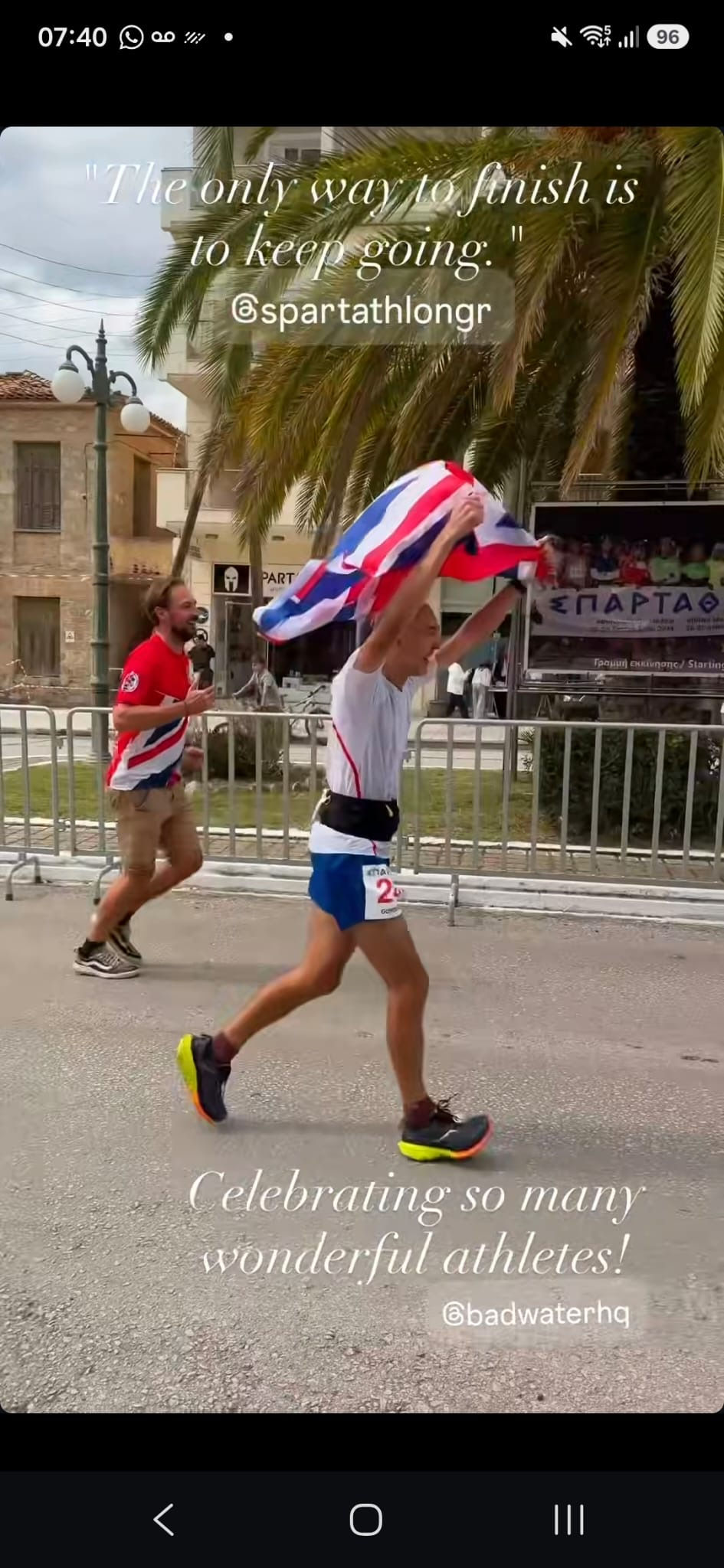
I reach the statue of King Leonidas and you know the rest. Kissing the foot. The olive wreath, drinking water from the river Eurotas, photos. TBH, it all went quite quickly and was a bit of a blur. I had visualised this moment so many times that it was surreal for it to be actually happening to me.
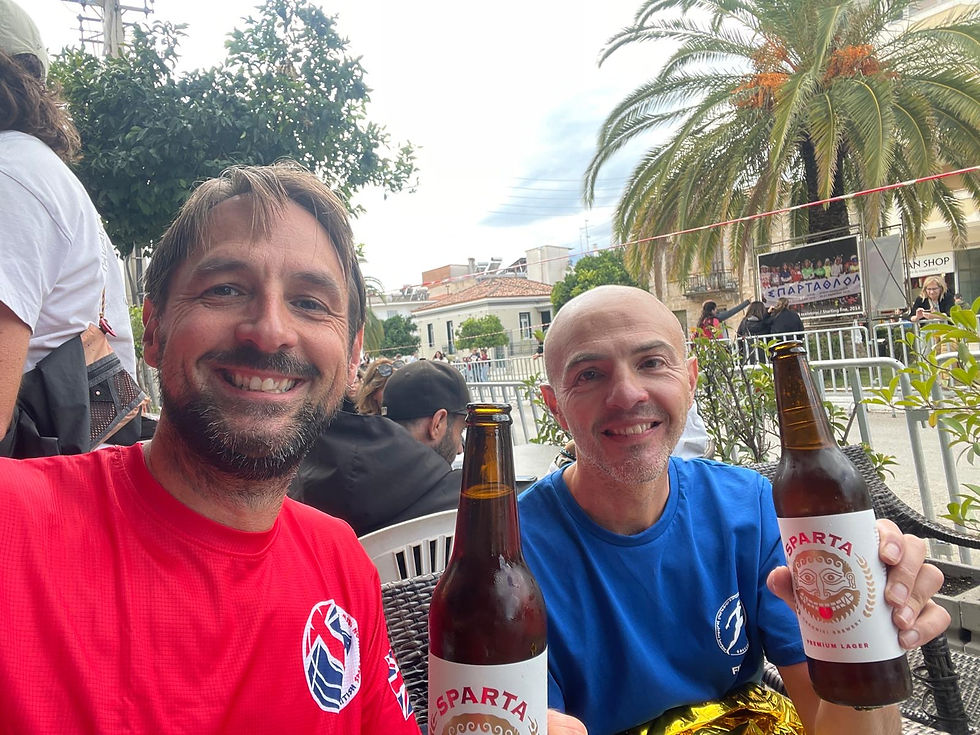
After a quick stop in the first aid tent Andy and I met with other members of the BST at a cafe, cheering on the runners with a beer. I’d finished in 29.15 (a massive over-achievement), has savoured being in the race, and my relationship with Andy seemed to have survived.
I’d just delivered my best ever race performance in the greatest race in the world.
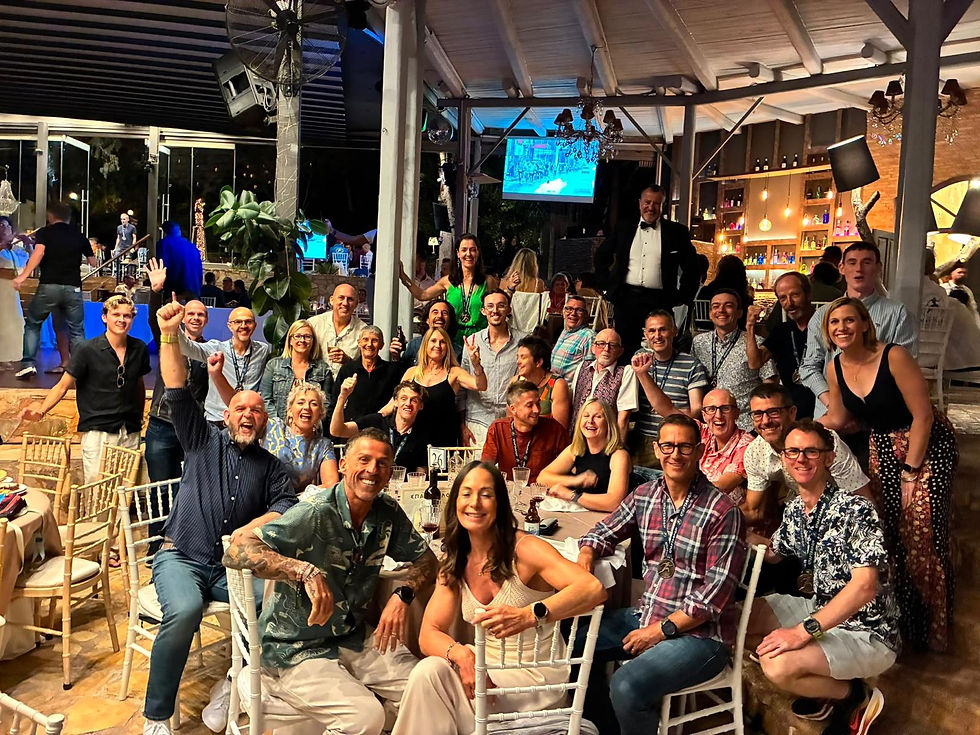
One of the things that makes Spartathlon special is that the race is cocooned within a wider 5 day period of being with your national team and the other teams. We were taken to a lovely beachside hotel after the race, then back to Sparta to pick up drop bags, run the naked mile and have a lunch put on by the municipality. Then back to Athens and a fantastic gala dinner on the Tuesday evening.
It was great to get to know other BST runners and crew, and I learned a lot about this race and others. Chatting to others about their exploits made me feel like running a fast marathon, a multi-stage race, and everything in between (not the LA to LV run though, that’s absurd). I loved the mix of accomplishment, humility and camaraderie in the team.
Thank you to all the runners and crew, and particularly the organisers of the British Spartathlon Team. I know that website upkeep and kit logistics is not glamorous work, but it’s much appreciated.
Thank you to the OG Spartathletes for sharing your wisdom. Between the runners and crew there must be experience of at least 100 Spartathlons. It would be a privilege to add my single experience to a team in the future.
Thank you to Camino coaching - David, Paula and Darren - for your support and guidance. We did it!
Thank you to all the volunteers and the Spartathlon Organising Committee
Thank you to Andy and my super supportive wife and daughter. I couldn’t have done it without you.
Now something for the running nerds:
Lessons learned
Waist band and vest were the two main options and it’s personal preference as to which is better. I also learned of a new system - shorts! In my case I struggled with the heat at NDW100 this year, and I think the vest contributed to that, so I went with the waist band for Spartathlon. Although I practised with it, I didn’t really get on with the waist band on the day (I probably put too many things in it). I think the smart move would have been a 2L or 5L vest.
Every hour I had roughly 70g of carb via gels and drink, topped up by some real food. That worked well. I eased off the gels after 24 hours as I was sick of them
Crewed CPs went well. Andy did a fab job keeping me fed, watered, safe and in good spirits.
My high vis waist coat was a mistake as it amounted to a 0.5 layer. Ronhill have a nice band system which I should have used
When I was accepted into the race I decided to do everything possible to be in good shape including ‘the other stuff’: stretching, strength and mobility exercises. You know, the boring stuff. I did that for the first time and I don’t think it was a coincidence that my muscles and joints were still working at a late stage.
I carried a 500ml Salomon flask for the entire race. It worked well but after about 24 hours of using the same arm I struggled to drink from it. I couldn’t lift my hand above my head and had to do shoulder / arm movements whilst running to loosen it up! In future regularly switch bottle between hands.
I ended up pacing this race very well. Part of that was by accident as I was genuinely going for a 32 hour pace at the start. But it was a vindication of the Bob Hearn approach - bank energy, not time. After the race I managed to thank Bob for his race reports. If it had been hot I would have been at my original time of 33 hours or more.
The month before the race I went no sugar and no booze (a David B tip) so I was at fighting weight by the time of the race.
2026 SPARTATHLON SUMMARY....
IT"S A FAMILY x
SO SIGN UP FOR 2027 AND GET SOME OF WHAT THE GREEKS DO BEST X


Comments